Updated: May 2026
Waerebo Tour — Wae Rebo Mbaru Niang Houses — UNESCO Heritage A…
Waerebo Tour is a curated Indonesia luxury tourism experience offered by Wae Rebo Heritage Voyages: handpicked routes, vetted operators, transparent pricing, and 24/7 concierge support across Indonesia.
- What makes Waerebo Tour a premium experience.
- How Wae Rebo Heritage Voyages curates exclusive access and concierge logistics.
- Routes, seasons, and pricing transparency — no hidden fees.
The seven Mbaru Niang of Wae Rebo: structure, ritual, and what each tier means.
The Mbaru Niang are not vernacular curiosities — they are five-tiered ritual machines, each level holding a specific function from cooking to ancestral storage. UNESCO 2012 recognised them precisely because the knowledge is alive. Indonesia travel guide
View the 3-day private tour →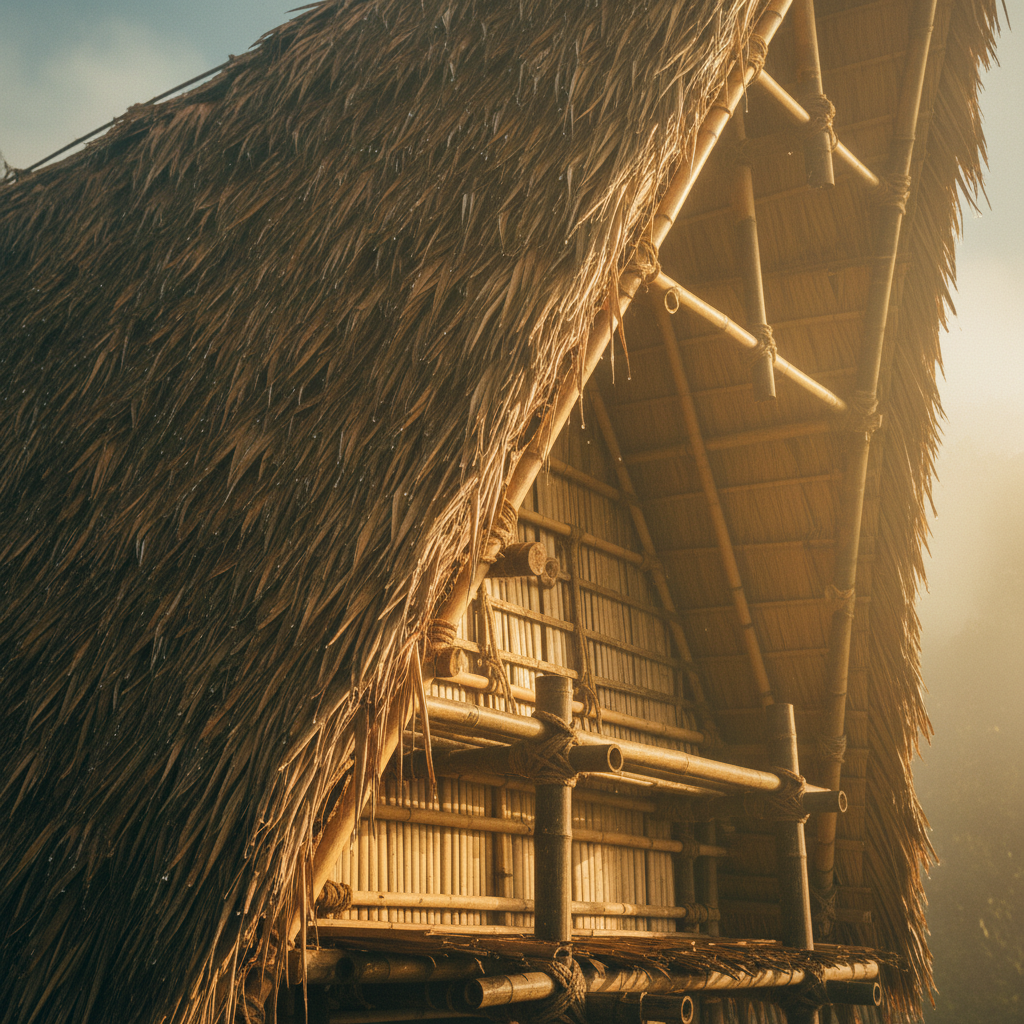
Why seven, why cone-shaped, why five tiers
Wae Rebo holds exactly seven Mbaru Niang. The number is not decorative — each house corresponds to one of the seven Manggaraian sub-clans descended from the village ancestor Empo Maro. Even after generations of intermarriage and movement to lower-altitude settlements, the seven-house grid is maintained as the genealogical record of the community.
The conical form is acoustic and ventilation engineering. The fifteen-metre apex draws cooking smoke up and out without requiring chimney perforations in the wall. The five-tier internal structure provides graduated insulation — the ground floor stays warm in mountain night, the upper tiers stay cool in afternoon.
Each tier has a function. Ground (Lutur) is the domestic and meal space. First (Lobo) is family sleeping. Second (Lentar) is food storage — rice, corn, dried meat. Third (Lempa Rae) is seed storage for the next planting cycle. Fourth and fifth (Hekang Kode) are ancestral storage — heirlooms, ceremonial drums, the textiles passed down through clan lines.
Construction without nails, designed for centuries
The Mbaru Niang use no metal fasteners. Ironwood frames are joined with mortise-and-tenon. Lontar palm thatch — gathered from a single species, Borassus flabellifer — is laid in five overlapping layers and tied with rattan strips. The lashings are inspected and replaced annually as part of the village’s calendar.
Restoration in 2008-2011 followed traditional techniques entirely. UNESCO field assessors noted that the technical knowledge — which beams to harvest, which trees to climb, how thick to lay the thatch — was held in living memory and transferred through five master craftsmen to a younger generation. The village had pre-empted the loss of the knowledge by rebuilding two houses in 2003 as a teaching exercise. By the time the formal restoration began the next generation could lead.
Read the official UNESCO citation at UNESCO Asia-Pacific Heritage Awards.
Inside the central Mbaru Bate — and why we don’t enter it
One Mbaru Niang — the central Mbaru Bate — is the ancestral hearth of the community. It is not a domestic dwelling. It contains the ceremonial drums, the clan altar, the woven masts used in the Pa’u Wa’u welcoming rite, and the Compang stone alignment that links the building to the courtyard prayer altar.
Visitors are not invited inside the Mbaru Bate. We brief our pilgrims explicitly on this protocol before the welcome ceremony begins. Photography of the Mbaru Bate exterior is permitted; interior photography is not.
What pilgrims experience instead is the welcoming ceremony itself, conducted on the courtyard between the Mbaru Bate and the visitor-housing Mbaru Niang. The elder offers the ritual rooster (the rooster is not slaughtered for the welcome — that is a separate ceremony for ancestor-veneration days), recites the genealogical chain, and accepts the visitor donation on behalf of the village fund. Pilgrims are then assigned to the host clan house for their stay.
Where to stay during your visit and what to expect
Pilgrims sleep in one of the six visitor-permitted Mbaru Niang. The host clan rotates so that each clan benefits equally from tourism. Our team coordinates the assignment with the village council typically two weeks ahead.
The interior is shared — typically 6-12 pilgrims per house in mosquito-net-covered floor mattresses on the second tier (Lobo). The host family sleeps in the same house. Bathroom is a shared external structure with cold-water bucket bath. There is no electricity. Light is from candles, oil lamps, or our headlamps.
Read our practical Wae Rebo trekking guide for fitness and weather details. For getting there read Labuan Bajo to Wae Rebo itinerary.
Why architectural preservation matters here, specifically
Most traditional Indonesian architecture exists today only as museum reconstruction. The Bugis schooners of South Sulawesi, the Toraja tongkonan of Tana Toraja, the Batak rumah adat of North Sumatra — all are still built but increasingly in tourist contexts rather than functional domestic settings.
Wae Rebo is the rare counter-example. The seven Mbaru Niang are inhabited daily. Cooking happens on the Lutur. Children sleep on the Lobo. Rice dries on the Lempa Rae. Drums sit in the Hekang Kode awaiting ceremony. The architecture is not preserved as artifact — it is preserved by use.
The 2012 UNESCO Award of Excellence was specifically conferred for this kind of living preservation. When you stay in a Mbaru Niang, you participate in the preservation. Our tours channel donation directly to the conservation fund the village manages. Wikipedia: Wae Rebo has additional context on the conservation history.
Visit the seven Mbaru Niang
Tell us your dates. We coordinate the host-clan assignment and the village-council pre-clearance for every visit.
Why the architectural knowledge survived where others vanished
Most Indonesian vernacular architecture is no longer built using traditional techniques. The Bugis schooners of South Sulawesi, the Toraja tongkonan, the Batak rumah adat — all are still constructed but increasingly with modern materials, modern joinery, and tourist-display priorities. Wae Rebo is the rare counter-example because of three preservation accidents that became preservation strategies. First — the village’s altitude and isolation kept it economically marginal until the 1990s, so traditional self-reliant construction continued by necessity not by choice. Second — the village council made an explicit decision in 2003 to rebuild two Mbaru Niang houses as a teaching exercise for the next generation, anticipating the loss of master craftsmen. Third — the 2008-2011 formal restoration funded by Indonesian heritage grants gave the next generation real practice on real structures. By 2012 the next generation had built four houses to UNESCO-evaluable standard. Future preservation depends on the next round of teaching exercises, scheduled for 2028-2030.