Updated: May 2026
Is a Wae Rebo Village Trek Safe for Luxury Travelers?
- Physical safety is ensured by experienced local guides who manage the trail’s challenges and set a comfortable pace.
- Health risks are minimized through the provision of purified water and vetted, hygienically prepared meals.
- Cultural security is maintained by a guide who navigates complex local customs, ensuring a respectful and welcome reception.
The air thins and cools as you ascend, each step taking you further from the familiar. Mist clings to the dense foliage of the Flores highlands, the scent of damp earth and distant woodsmoke filling your senses. Suddenly, the forest canopy breaks, and there they are: seven conical roofs, perfectly formed and thatched with lontar palm, rising from a small, immaculate clearing. This is Wae Rebo. The immediate sense of tranquility is palpable, but for the discerning traveler, a critical question surfaces alongside the awe: is an experience this remote, this authentic, truly safe? The answer, for those who value curated travel, is a resounding yes. The key lies not in avoiding the wildness, but in navigating it with expertise, transforming a rugged expedition into a seamless and secure cultural immersion.
Deconstructing the “Trek”: A Physical Reality Check
Let’s be precise about the physical undertaking. The term “trek” can conjure images of arduous, multi-day expeditions. The journey to Wae Rebo, however, is more accurately described as a vigorous, single-afternoon hike. The trail itself spans approximately 7 kilometers from the final vehicular drop-off point near Denge village. My lead guide in Flores, Pak Agustinus, who has walked this path over 500 times, clocks the average duration for our clients at “three hours, give or take, depending on the photo stops.” The ascent involves an elevation gain of around 600 meters, from roughly 500 meters above sea level to Wae Rebo’s perch at 1,100 meters. The path is well-trodden but natural, composed of packed earth, occasional volcanic rock sections, and several charmingly rustic bamboo bridges over small streams. For a traveler with a moderate level of fitness—someone who enjoys regular walks or a weekly Pilates class—it is entirely manageable. The primary challenge isn’t technical skill but rather sustained uphill effort. This is where a luxury approach fundamentally changes the experience. Our guided Wae Rebo tour ensures you are not simply pointed at the trail. A private guide sets a pace tailored to your comfort, while a dedicated porter carries your overnight bag, leaving you with only a small daypack. We provide professional-grade walking poles, which significantly reduce strain on the knees during both ascent and descent. The question of whether the Wae Rebo village trek is safe from a physical standpoint is answered by preparation and support, turning a potential strain into an invigorating and enjoyable part of the adventure.
Health and Acclimatization in the Manggarai Highlands
When venturing into remote territories, health and hygiene become paramount concerns. The Manggarai highlands, while beautiful, require prudent management of potential health risks. Firstly, altitude. At 1,100 meters, Wae Rebo sits well below the 2,500-meter threshold where altitude sickness typically becomes a concern for most people. However, the air is noticeably cooler and crisper. Our itineraries often include an overnight stay in a quality lodge near Denge village the night before the trek, allowing for gentle acclimatization. Secondly, and more critically, is food and water safety. The rule is simple: do not drink the tap water. All reputable operators, including Wae Rebo Heritage Voyages, provide an ample supply of sealed bottled or professionally filtered water for the duration of your stay. Meals within the village are a highlight, prepared by the local women over open fires. Our process involves coordinating with the village ahead of time to ensure ingredients are fresh and preparation methods meet our hygiene standards. We can accommodate most dietary restrictions with at least 48 hours’ notice. The nearest reliable medical clinic is in Dintor, a 90-minute drive from the trail’s start, and the main hospital is hours away in Ruteng. This reality underscores the importance of preventative safety. Our guides are all certified in wilderness first aid and carry a comprehensive medical kit, a detail that provides significant peace of mind. As noted by Indonesia’s official tourism board, the village’s isolation is a core part of its appeal, but it necessitates a professionally managed approach to health and safety.
Navigating Cultural Protocols: The Unseen Element of Safety
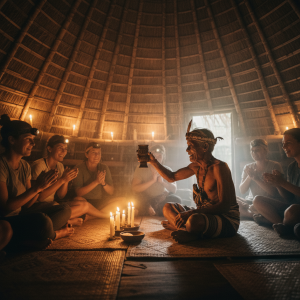
Physical well-being is only one facet of a safe journey. Cultural safety—the ability to navigate an unfamiliar society with respect and grace—is equally vital. A misstep, however unintentional, can lead to awkwardness or offense, marring the entire experience. In Wae Rebo, observing protocol is not just polite; it is mandatory for entry. Upon arrival at the village edge, guests must wait at a small shelter until they are formally invited in. The first stop is the main ceremonial house, the *Mbaru Niang Gendang*, for the *Waelu’u* welcoming ritual. Here, a village elder accepts a small offering (our guide handles this, typically around IDR 50,000) and recites a chant in the Manggarai language, welcoming you as a guest and asking the ancestors for your protection. Only after this 10-minute ceremony are you free to explore and interact. This ritual is the bedrock of your acceptance into the community. A knowledgeable guide is indispensable here, acting as your translator and cultural attaché. They will advise on etiquette, such as asking for permission before taking close-up photographs of individuals and dressing modestly (covering shoulders and knees is a sign of respect). The village’s dedication to its traditions is a primary reason it received a prestigious UNESCO Asia-Pacific Award for Cultural Heritage Conservation back in 2012. Understanding and honoring these protocols is the most critical component of ensuring a smooth, safe, and genuinely rewarding visit.
Accommodation and Amenities: Redefining Luxury in a Traditional Setting
For the luxury traveler, it is crucial to align expectations with reality. The “luxury” of Wae Rebo is not found in thread counts or en-suite bathrooms; it is in the unparalleled access to a living culture, a privilege in itself. Accommodation is communal, within one of the seven magnificent *Mbaru Niang* houses. Guests sleep side-by-side on hand-woven *tikar* mats laid out on the floor of the second level. While this is the authentic, unchangeable reality of a village stay, a premium operator elevates the comfort. We provide high-quality, clean sleeping bags, comfortable pillows, and fresh liners, ensuring a warm and hygienic night’s sleep in the cool mountain air, where temperatures can drop to 12-15°C. The sanitary facilities are basic and shared, typically consisting of two Indonesian-style squat toilets and a *mandi* (a large basin of cold water with a scoop for bathing). There is no hot water. There is no Wi-Fi. A generator provides electricity for a few hours after sunset, usually from 6 PM to 10 PM. The authenticity is the core of our Wae Rebo Tour experience. The value we add is in the details that soften the edges of this rustic reality: a private dining area set up for your meals, a selection of quality snacks and beverages, and the constant attention of your guide to ensure your needs are met within the village’s framework. The experience is about authentic immersion, curated for maximum comfort and safety.
Logistics and Security: The Value of a Curated Journey
The question of whether a Wae Rebo village trek is safe extends to the entire logistical chain, beginning the moment you leave your hotel in Labuan Bajo. The overland journey is a significant undertaking. The 140-kilometer drive to Denge can take between 5 and 7 hours due to winding, narrow, and often poorly maintained roads. Attempting this with a standard rental car or, for the truly adventurous, public transport, introduces unnecessary risk and discomfort. A premier waerebo tour eliminates these variables. We utilize private, late-model, air-conditioned 4WD vehicles piloted by experienced local drivers who have navigated these specific roads hundreds of times. They understand the terrain and potential hazards. In terms of personal security within the village, Wae Rebo is remarkably safe. The community, comprised of the Manggarai people, is tight-knit and famously welcoming. Instances of theft are virtually non-existent. The real security threat for an independent traveler lies in logistical failure—a vehicle breakdown, a miscommunication with a local guide, or arriving to find the village cannot accommodate you. By entrusting the journey to a specialist operator, every permit, fee, meal, and transport link is pre-arranged and guaranteed. This logistical security is the invisible scaffolding that supports a safe and stress-free expedition from start to finish.
Quick FAQ: Your Wae Rebo Trek Questions Answered
What is the best time of year to trek to Wae Rebo?
The dry season, from April through October, offers the most favorable conditions. The trail is less muddy and slippery, and you have a higher chance of clear skies for photography. The months of May, June, and September are particularly good, as they fall just outside the peak domestic holiday season, offering a more serene experience with fewer fellow travelers.
Is there electricity or an internet connection in Wae Rebo?
There is no cellular reception or Wi-Fi in the village. This digital detox is a core part of the experience. The village operates a communal generator for a few hours each evening, typically from 6:00 PM to 10:00 PM. This provides power for basic lighting in the houses and a few charging points, though it’s best to bring a fully charged power bank.
What essential items should I pack for the overnight stay?
Pack a small overnight bag that a porter can carry. Key items include a warm fleece or jacket for the cool evenings (temperatures can drop to 10°C), a lightweight rain jacket (even in the dry season), comfortable, broken-in trekking shoes, a headlamp or torch for navigating after dark, personal toiletries, and any essential personal medications. Your main luggage will be securely stored in the vehicle at the base of the trail.
Is the trek suitable for older travelers or families with children?
Yes, with considerations. We have successfully guided active travelers into their late 60s. The key is a steady pace and good general fitness. For families, the trek can be a fantastic adventure for children aged 10 and up. For younger children, the 3-4 hour duration can be demanding. A private tour is essential for these groups, as it allows the guide to completely tailor the pace and rest stops to the party’s specific needs and abilities.
Ultimately, a journey to Wae Rebo is a step into another world, a rare opportunity to engage with a community that has preserved its unique architectural and cultural heritage against the relentless tide of modernity. The perceived risks of its remoteness are not just manageable; they are effectively neutralized by professional planning and expert local guidance. The experience ceases to be about “roughing it” and becomes one of privileged, secure access. Let us handle the intricate logistics and cultural nuances, ensuring your journey into the heart of Flores is as profoundly moving as it is impeccably safe. Explore our fully-serviced waerebo tour offerings and discover why a journey with Wae Rebo Heritage Voyages is the definitive way to experience this cultural landmark. Inquire about your private Wae Rebo tour today.