Updated: May 2026
Caci Dance & Wae Rebo Cultural Protocol — Etiquette Guide
Waerebo Tour is a curated Indonesia luxury tourism experience offered by Wae Rebo Heritage Voyages: handpicked routes, vetted operators, transparent pricing, and 24/7 concierge support across Indonesia.
- What makes Waerebo Tour a premium experience.
- How Wae Rebo Heritage Voyages curates exclusive access and concierge logistics.
- Routes, seasons, and pricing transparency — no hidden fees.
The Caci dance and Manggaraian protocol — what visitors need to know.
Caci is a sacred whip-fight ritual, not entertainment. Photography rules, dress code, and how to respond if invited to participate. We brief every pilgrim before any cultural ceremony. Indonesia travel guide
What Caci is — and what it isn’t
Caci (pronounced ‘cha-chi’) is a Manggaraian ritual whip-fight performed at significant ceremonial moments — harvest festivals, ancestor-veneration days, weddings, and historically as a coming-of-age trial. Two men face each other; one carries a whip and shield, the other carries a parrying baton. They alternate strikes, dancing to the rhythm of the gong drums.
Caci is not entertainment, despite increasing tourist demand. The Manggaraian view is that Caci is a spiritual offering — the strikes invoke ancestral protection, the gong rhythms communicate with the spirit world, and the bloodied skin (yes, the whips draw blood) is the offering itself.
When tourists ask the village to perform Caci on demand, the village politely declines or charges a substantial sum for what they consider a desacralised performance. We do not arrange Caci performances. If a Caci ceremony coincides with your visit, you may observe — but only with the village council’s explicit permission, and only with strict photography rules.
If you witness Caci — the photography rules
Flash photography is prohibited. The whips move at high speed and flash disrupts the dancers’ depth perception, increasing injury risk. The village will not permit flash photography during any Caci ceremony.
Photography is permitted from designated observer positions only — typically the wooden platform on the eastern edge of the courtyard. The village allocates these positions to elders, special guests, and (occasionally) approved visitors. Our team requests the visitor allocation in advance when ceremonies are scheduled.
Video recording: subject to council permission. Drone photography: prohibited. Commercial photography: requires written permit from the Manggaraian regional government and the village council; cost varies. We do not arrange commercial Caci photography.
Dress code for any Manggaraian ceremony
Manggaraian protocol asks visitors to dress modestly during ceremonial moments. Long trousers (men) or long skirt (women). Covered shoulders. No bright neon colors. Our pilgrims often bring a simple cotton shirt and trousers specifically for ceremonial days.
If you are invited inside a Mbaru Niang clan house — typically the host family for your stay — remove shoes at the entrance. The first tier (Lutur) is the public-facing space; sit cross-legged on the woven mat unless invited to a chair. Accept any food or drink offered with both hands.
Read our parallel Wae Rebo Mbaru Niang houses for the architectural protocol context.
If invited to dance — what to do
On rare occasions, particularly during shoulder-season visits when there is rapport with the host family, a Manggaraian elder may invite a male visitor to participate in a friendly demonstration of Caci. This is not the full ritual — it is a teaching exchange.
If you accept, the elder will fit you with the headdress (panggal) and demonstrate the basic strike-and-parry rhythm. The whip used for visitors is unloaded — softer, with no metal tip. There is no expectation of skill; the gesture is the participation.
If you decline, this is also fine. A polite ‘terima kasih, saya hanya menonton’ (thank you, I will just watch) is correct. Manggaraian etiquette has no penalty for declining a ceremonial role.
Compang stone, Pa’u Wa’u welcome, and the daily rituals
Beyond Caci, several other Manggaraian rituals shape daily life in Wae Rebo. The Compang is the central ceremonial stone in the courtyard, used for prayer at dawn and dusk. The Pa’u Wa’u is the welcoming ceremony for outside visitors, conducted at the start of every overnight stay. The departure cleansing rite is performed before pilgrims descend.
Our team translates each ceremony in real-time, briefly. If you wish to ask questions, do so after the ceremony concludes — interrupting the rhythm during is considered impolite. Read our trekking guide for the full pre-trip briefing.
For broader context on Manggaraian culture, Wikipedia: Manggarai people has additional ethnographic background.
Plan a respectful Wae Rebo visit
Tell us your interests — architectural focus, ritual focus, or trekking focus. We adjust the briefing depth to match your priorities.
Comparing Caci to other Indonesian ritual martial arts
Caci sits within a broader Indonesian tradition of ritual martial dance forms, and understanding the comparison clarifies why it must be witnessed rather than performed-on-demand. Pencak silat (West Java, broader Indonesia) is a martial art codified for both ritual and combat use; it has formal schools, codified moves, and a global tournament circuit. Saman dance (Aceh) is rhythmic seated dance with hand-clapping and chest-percussion — performative but not combative; tourist demand for Saman has accelerated codification. Reog Ponorogo (East Java) involves animal masks and trance states; performances are increasingly tourist-oriented. Caci differs because the ritual function (ancestor invocation through whip-rhythm) requires specific lunar-calendar timing and clan-specific permissions. Decoupling the dance from its ritual context drains it. The Manggaraian council explicitly distinguishes ceremonial Caci (clan-specific, lunar-timed) from demonstration Caci (educational, visitor-facing, may be arranged for guests when permission granted). Our pilgrims may witness either, with the council’s prior agreement.
The ancestral homes of Wae Rebo
Stepping into Wae Rebo is like entering a mist-shrouded dream, where the unique conical houses known as Mbaru Niang pierce the sky. These architectural marvels are more than mere dwellings; they are living testaments to Manggaraian heritage, each meticulously crafted from local wood, bamboo, and palm fiber without the use of a single nail. Rising up to 15 meters and featuring five distinct levels, each floor holds symbolic significance, from the ground level housing the community, to the sacred top floor dedicated to ancestral offerings. Their preservation speaks to a profound respect for tradition, echoing the global importance of cultural heritage sites recognized by entities like the UNESCO World Heritage Centre.
The design of the Mbaru Niang is deeply intertwined with Manggaraian cosmology, representing the unity of the community and their connection to the spiritual realm. The central hearth within each home serves as a gathering point, a place for storytelling, shared meals, and the continuation of age-old customs. For visitors on a Waerebo tour, understanding the intricate layers of these homes provides invaluable insight into the soul of the village, preparing them for a deeper, more respectful engagement with its inhabitants.
Journeying to Wae Rebo: a path less travelled
Reaching Wae Rebo is an integral part of the experience, a pilgrimage that underscores the village’s secluded, sacred status. The journey typically begins with a drive through Flores’ verdant landscapes, followed by a challenging yet rewarding trek of approximately 7 kilometers through dense tropical rainforest. This 3 to 4-hour hike winds through muddy paths, across gurgling streams, and past towering trees, offering glimpses of exotic flora and fauna. The physical effort builds a profound sense of anticipation, making the eventual sight of the village nestled in its mountain valley all the more breathtaking.
Upon arrival, visitors are traditionally welcomed with the Waelu’u ceremony, a heartfelt greeting ritual that asks for permission to enter the village and ensures the safety and well-being of guests. This is not merely a formality but a genuine expression of Manggaraian hospitality, inviting you to become a temporary part of their community. A premium Waerebo tour expertly manages these logistics, ensuring that while the journey remains authentic and immersive, travelers benefit from professional guides, comfortable transfers, and thoughtful preparations, allowing them to focus entirely on the cultural discovery.
Beyond the dance: daily life and Manggaraian hospitality
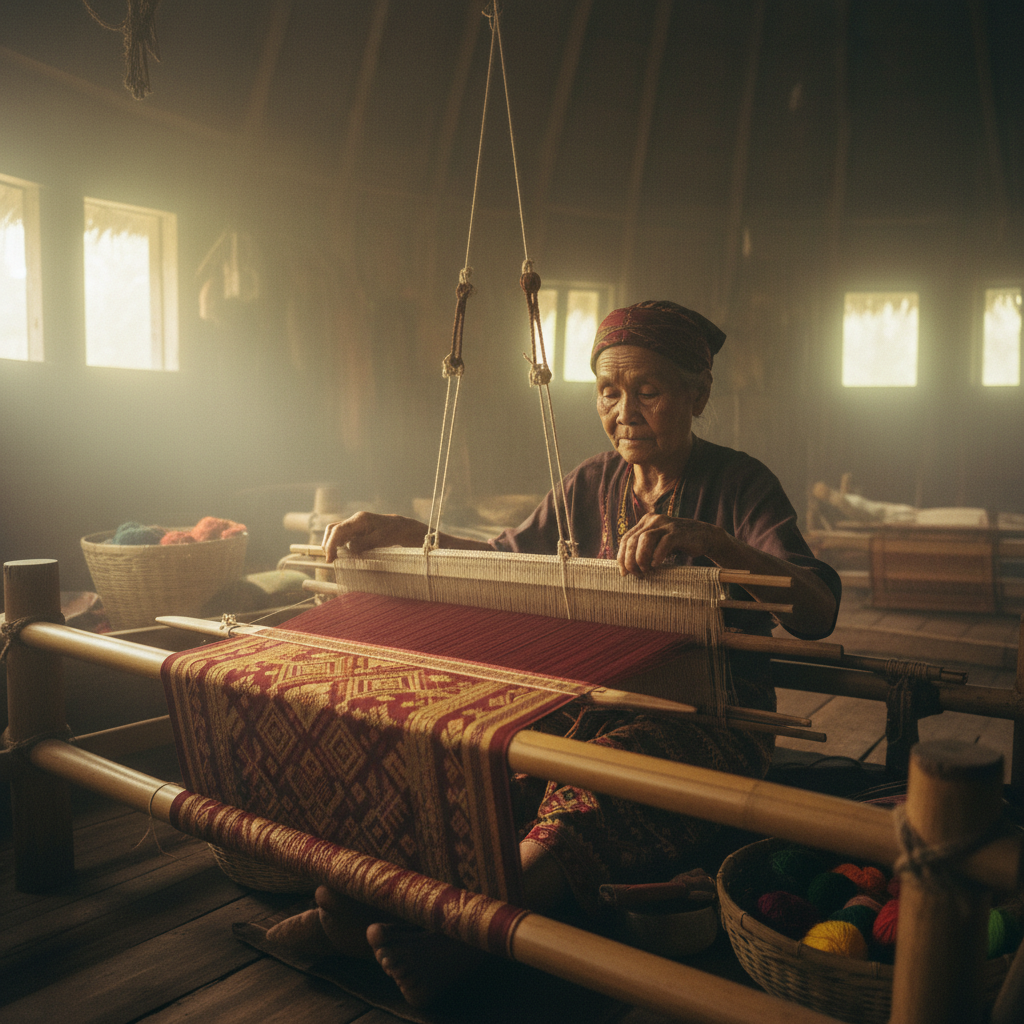
While the Caci dance is a powerful expression of Manggaraian culture, a visit to Wae Rebo offers a broader window into the community’s daily life and profound sense of hospitality. Observe villagers engaged in their routines: women weaving intricate ikat textiles, men tending to coffee plantations, and children playing freely amidst the ancestral homes. The village consists of seven main Mbaru Niang, housing a close-knit community of around 120 people, where communal harmony is paramount.
Engaging respectfully with the community is key. Simple gestures, like removing your shoes before entering a Mbaru Niang or offering a quiet nod of acknowledgment, convey genuine respect. You might be offered a cup of locally grown coffee, a sweet gesture of welcome that speaks volumes about their warmth. A well-curated Waerebo tour by Wae Rebo Heritage Voyages ensures that interactions are meaningful and non-intrusive, often facilitated by local guides who bridge language and cultural gaps, enriching your understanding far beyond what a typical tourist experience might offer.