Updated: May 2026
Waerebo Tour — Labuan Bajo to Wae Rebo Itinerary — Routes, Sto…
Waerebo Tour is a curated Indonesia luxury tourism experience offered by Wae Rebo Heritage Voyages: handpicked routes, vetted operators, transparent pricing, and 24/7 concierge support across Indonesia.
- What makes Waerebo Tour a premium experience.
- How Wae Rebo Heritage Voyages curates exclusive access and concierge logistics.
- Routes, seasons, and pricing transparency — no hidden fees.
Labuan Bajo to Wae Rebo: routes, overnight stops, road conditions.
Two main route options, four worthwhile overnight stops, and the road conditions you actually encounter. The drive is more of an adventure than the trek — plan for that.
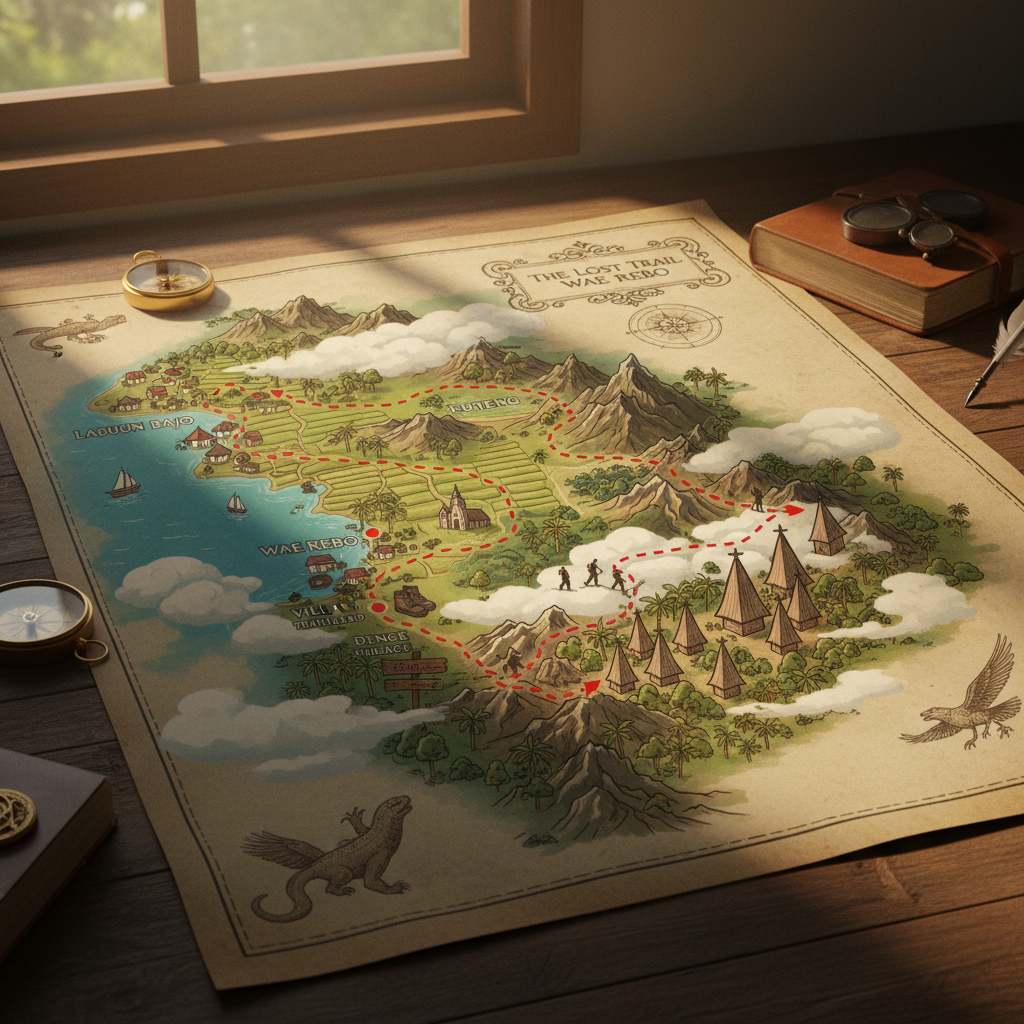 Labuan Bajo to Ruteng with Manggaraian rice terraces and Mount Inerie volcano”/>
The two routes, compared
Route A — the conventional path — runs Labuan Bajo (LBJ) → Ruteng (≈4 h via Trans-Flores Highway) → Denge (≈2 h on a smaller mountain road). Total drive day one: 6 hours moving, plus stops. This is the route every guidebook describes.
Route B — slower but more interesting — runs Labuan Bajo → Cancar Spider Rice Fields → Ruteng → Denge with a lunch stop at Cancar. The detour adds 90 minutes but lets you see the Lingko traditional spider-web rice terraces, which UNESCO has nominated as Indonesia’s next agricultural-heritage candidate. We default to Route B for our 3-day departures.
Recommended overnight stops if you want to extend
Some pilgrims prefer to break the drive — particularly if combining Wae Rebo with Komodo, Padar, or the Spider Rice Fields. Three options:
Ruteng (Manggaraian capital, mid-route): Spring Hill Bungalows is a Manggaraian-owned property with mountain views and Indonesian-Manggaraian fusion cuisine. 2-3 hours from LBJ, 90 minutes from Denge. Useful for an early-morning trek start without rushing the previous afternoon.
Bena village (south of Ruteng): a megalithic Ngadha-Manggaraian village 1.5 hours off the main highway. Add a day if cultural-architecture is your priority — Bena and Wae Rebo together form a north-south Flores cultural arc.
Aimere (south coast): the local arak distillery and traditional ikat weaving co-op. Add a half-day if you want to round out the Manggaraian experience with the lowland counterpart.
Road conditions and weather
The Trans-Flores Highway from Labuan Bajo to Ruteng is in good condition — paved, two lanes, well-maintained. Expect 4 hours moving average for the 130 km, accounting for switchbacks and the occasional convoy of trucks.
From Ruteng to Denge the road quality drops. The first 30 km are paved. The final 25 km are intermittent — paved sections, gravel sections, and several stream crossings. December-March monsoon can briefly flood the lowest crossing; we maintain a 4×4 with high clearance and our drivers know the alternate paths.
Driver shifts are crucial — we use Manggaraian drivers familiar with the road, never overland tourist drivers from Bali. The mountain driving requires experience our drivers have accumulated over years.
What to do at Cancar Spider Rice Fields
Cancar is the most photographed Manggaraian agricultural site — the Lingko (spider-web) rice terraces visible from a small ridge above the village. The pattern is allocated by the village council according to ancestral lineage; each family farms a wedge proportional to ancestry.
Photography window: best at 7-9 AM with side light, or 4-5 PM with golden light. The walk from the parking area to the viewing ridge is 15 minutes uphill — easy. We typically schedule a 90-minute Cancar stop for our 3-day departures.
If you want to deepen the visit, the village offers a brief ikat weaving demonstration in a community house. Tipping is appreciated — IDR 50,000 per visitor is appropriate.
Combining Wae Rebo with Komodo or Padar
Many pilgrims combine Wae Rebo with the Komodo National Park — Padar Island, Pink Beach, dragons at Rinca. This is logistically clean: the Wae Rebo 3-day tour ends at Labuan Bajo, where the Komodo phinisi day trips depart from. Add 2-3 days for a full Komodo arc.
We recommend doing Wae Rebo first. The trek leaves you with energy reserves you don’t expect, and the meditative pace of the highland village contrasts beautifully with the boisterous boat-trip energy of Komodo. Our companion brand Wikipedia: Komodo National Park (UNESCO World Heritage 1991) has detailed background.
For full Wae Rebo–Komodo combined planning, contact us — we hold partnerships with three Komodo phinisi operators and can quote the combined arc.
Plan your full Wae Rebo arc
Reply with travel dates and any extension preferences (Komodo, Bali, Bena village, ikat weaving). We design the full overland route.
Driving the Trans-Flores Highway — what the maps don’t show
The 130 km Labuan Bajo to Ruteng segment of the Trans-Flores Highway looks like a 2-hour drive on Google Maps. It takes 4-5 hours in practice, and the reasons matter for trip planning. The road climbs from sea level at Labuan Bajo to over 1,200 meters at Ruteng across switchback mountain terrain, with average speed under 30 km/h on the climbing sections. Village stops are frequent — children play near the road, motorbikes overtake on blind corners, and convoy trucks slow traffic. Our drivers know the shoulder rest stops where you can stretch without crowding the road. We also know the warung rumah makan with the cleanest bathroom facilities — about 90 minutes out from Labuan Bajo, just past Cancar. Meals on the highway: lunch at Spring Hill in Ruteng (Manggaraian fusion), or grab sago-flour cookies and Manggaraian coffee from roadside vendors at the highest pass. December-March monsoon adds 30-60 minutes for water crossings.
Immersing in Wae Rebo’s timeless embrace
After the winding roads and a final invigorating trek through mist-kissed forests, the sight of Wae Rebo’s conical Mbaru Niang houses emerging from the jungle is nothing short of magical. This remote village, nestled high in the mountains of Flores, offers more than just a scenic vista; it presents a profound cultural immersion. Upon arrival, visitors are traditionally welcomed with a Waelu ceremony, a ritual of respect and blessing performed by the village elders, which immediately connects you to the community’s deep-rooted customs and spiritual heritage.
The atmosphere is one of profound tranquility and genuine warmth. Here, the rhythm of life adheres to ancient traditions, largely untouched by the modern world. Guests are invited to stay in one of the seven iconic Mbaru Niang houses, experiencing firsthand the communal living that defines the Manggarai people. This intimate proximity allows for authentic interactions, from sharing meals to observing daily life, providing a rare glimpse into a culture that reveres its ancestors and maintains a harmonious relationship with its natural surroundings.
The unique architecture of the Mbaru Niang
The Mbaru Niang, with their distinctive conical shape and towering presence, are not merely dwellings but living symbols of Manggarai identity and cosmological beliefs. Each house stands approximately 15 meters tall, constructed primarily from wood, bamboo, and palm fiber, without the use of nails. Their unique multi-story design is meticulously crafted: the lowest level, Lutur, serves as the main living area, while the four upper levels are dedicated to food storage, ancestral offerings, and communal gathering spaces. This intricate architecture reflects a sophisticated understanding of engineering and a deep connection to the spiritual world.
More than just shelter, these structures embody the community’s collective memory and traditions. The preservation of these unique homes and the cultural practices within them is a testament to the villagers’ dedication. In recognition of its cultural significance and the community’s efforts, Wae Rebo received the UNESCO Asia-Pacific Award for Cultural Heritage Conservation in 2012, affirming its status as a vital heritage site. Exploring the intricate details and understanding the symbolism of each level enriches the visitor’s appreciation for this extraordinary architectural legacy.
Beyond the iconic village: The surrounding Flores experience
While Wae Rebo is undoubtedly the pinnacle of this journey, the adventure through Flores offers a tapestry of equally compelling experiences. The drive itself winds through the island’s central highlands, revealing stunning vistas of terraced rice fields that cascade down hillsides and glimpses of traditional villages. Stops along the way might include vibrant local markets, where the aromas of fresh spices and exotic fruits fill the air, or visits to small-scale coffee plantations, where the renowned Flores Arabica coffee is cultivated and processed by hand.
A luxury Wae Rebo tour elevates these peripheral experiences, ensuring seamless transitions and curated encounters. Imagine a private tasting of freshly brewed local coffee with a planter, or a spontaneous visit to a weaver’s home to witness the intricate process of creating ikat textiles. The cool, crisp air of the Flores highlands, the genuine hospitality of its people, and the island’s untouched natural beauty combine to create a holistic journey that extends far beyond the village gates, offering a profound connection to the heart of Indonesia.