Updated: May 2026
Waerebo Tour — Wae Rebo Trekking Guide — Fitness, Weather, Pac…
Waerebo Tour is a curated Indonesia luxury tourism experience offered by Wae Rebo Heritage Voyages: handpicked routes, vetted operators, transparent pricing, and 24/7 concierge support across Indonesia.
- What makes Waerebo Tour a premium experience.
- How Wae Rebo Heritage Voyages curates exclusive access and concierge logistics.
- Routes, seasons, and pricing transparency — no hidden fees.
Trekking to Wae Rebo: fitness, weather, packing, and what surprises most pilgrims.
The Wae Rebo trek is moderate — not technical — but altitude, mud, and weather reward preparation. Here is the briefing we give every traveler in person at Denge basecamp. Indonesia travel guide
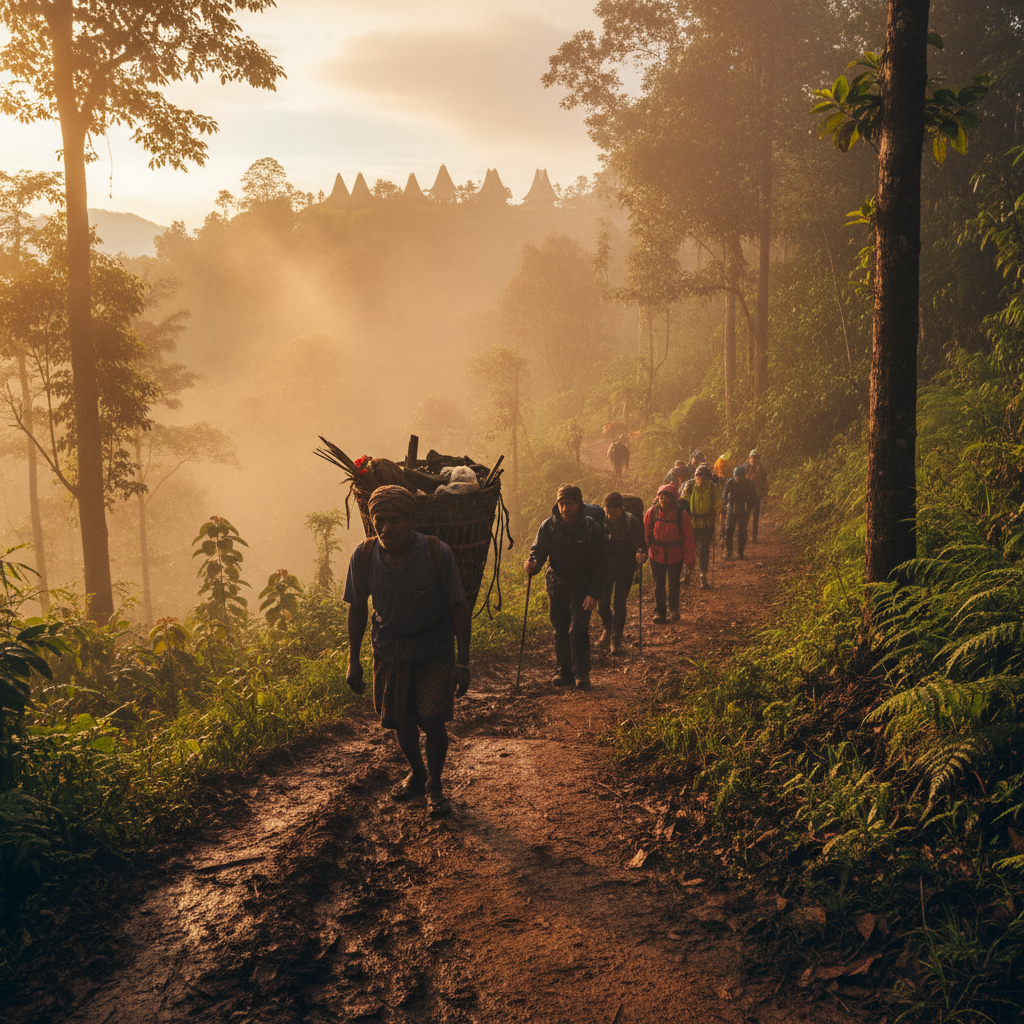
Trail profile — what 1,200 metres of elevation actually feels like
The Denge-to-Wae Rebo trail rises from approximately 760 metres at Denge village to 1,100 metres at the Wae Rebo clearing. That is 340 metres net gain over roughly 4-5 kilometres horizontal distance — moderate by Sumatran or Papuan trekking standards, but the path is not graded for tourists. It is the same trail the village has used for centuries to access water, firewood, and the lower agricultural plots. Indonesia on Wikipedia
Surface conditions vary by season. April through November the trail is firm but rocky in three sections — bring sturdy hiking shoes with toe protection. December through March monsoon turns several stretches to mud, particularly the second hour where the trail crosses two seasonal streams. Trekking poles are useful in monsoon; we provide them on request.
Average ascent time is 3 to 4 hours including rest stops. Descent is 2 to 3 hours. We pace the trek deliberately slowly to acclimatise — the altitude is not extreme but combined with humidity and the duration, fatigue accumulates.
Fitness honestly assessed
The trek is suitable for travelers in normal walking fitness — anyone comfortable with a 4-hour walk on uneven trail with a 25-30% gradient in two sections. We have hosted pilgrims aged 14 to 72 successfully. The variables that matter more than age are: ankle stability, willingness to use trekking poles, and tolerance for tropical humidity.
If you have knee issues, the descent is more challenging than the ascent — the trail is uneven and several sections have slick clay-stone surfaces. Trekking poles plus our porter support (we carry your day bag if you wish) make the descent manageable. We have never had a pilgrim unable to complete the descent, but we have rerouted for medical concerns once.
What to do before booking: walk 5 km on uneven trail in your home country at least three times in the month before departure. If that walk feels comfortable, the Wae Rebo trek will too.
Weather windows and seasonal differences
April to October is the dry season — clear mornings, occasional afternoon showers, ideal trekking conditions. Trail surface firm. Visibility from the village clearing is at its peak; sunset cloud-line crossings are most predictable.
November to March is rainy season. The trail is muddier, crossings can require careful footing, and the Mbaru Niang clearing often sits under cloud for full afternoons. The trade-off: the village is quieter, the cloud-bath atmosphere is more dramatic, and the weaving sessions inside the houses are longer.
Our recommendation for first-time pilgrims: April-May or September-October. Shoulder weather, fewer mosquitoes, and the rice terraces around Cancar are most photogenic green. Read our companion Labuan Bajo to Wae Rebo itinerary for the full gateway logistics.
Packing list — the 12 things that actually matter
1) Hiking shoes with grip and toe protection — this is non-negotiable. 2) Lightweight rain shell (waterproof, not water-resistant) regardless of season. 3) Long trousers — the Mbaru Niang houses request modest dress and leg-cover protects from low brush. 4) Two pairs of trekking socks — wool or merino blend; cotton causes blisters in humid conditions. 5) Headlamp with spare batteries — village evening light is candle-and-fire only. 6) Sleeping bag liner — the homestay provides bedding but a liner adds hygiene buffer. 7) Reusable water bottle 1.5L+; our guides carry boiled refill water. 8) Insect repellent (DEET ≥30% for forest, picaridin works fine in clearing). 9) Small daypack 20-30L — porters carry your overnight bag. 10) Modest sun-shade hat. 11) Portable charger — no electricity in the village. 12) Cash in small Indonesian rupiah notes (50-100K) for incidental porter and homestay tips.
Three things that surprise most pilgrims
First: how cold the village gets at sunset. The clearing sits in a ridge bowl that channels evening cloud directly across at altitude. Temperatures drop from 25°C at trek-arrival lunch to 14-16°C by 7 PM. A fleece or warm layer makes the difference.
Second: how absolute the silence becomes after 9 PM. The village has no electricity beyond solar lanterns and the host family’s candles. The dogs settle. The children fall asleep. The only sound is wood crackling in the central fire pit and the wind moving through the lontar thatch above. Many pilgrims describe the night as the most still they have experienced anywhere.
Third: how rapidly the village rebuilds rapport with returning visitors. Our pilgrims are encouraged to leave a small gift — a photograph from a previous visit, a written letter, a small object significant to them. The host family remembers.
Plan your Wae Rebo trek
Reply with intended dates and group size. We respond with weather-window guidance and the full pre-trek briefing.
Mental preparation — the part most guides skip
The Wae Rebo trek is moderate physically but demanding mentally for travelers unused to extended slow-pace movement. Three mental factors matter as much as fitness. First — pace acceptance: our guides walk slowly intentionally, both for altitude acclimation and to honor village pace. Travelers used to brisk Western trail-walking sometimes feel the pace as frustrating; the trip improves when this resistance dissolves around hour two. Second — silence tolerance: large stretches of the trail offer little to look at except trees, mud, and your own breathing. Many travelers experience this as restorative; some experience it as anxious. Bring a small notebook if writing helps you settle. Third — uncertainty acceptance: weather windows shift on the day of trek. We commit to Plan B routes only at the trailhead briefing. Travelers who plan everything down to the hour benefit from explicitly relaxing this expectation before arrival. The mental shift is part of why pilgrims describe Wae Rebo as the most still experience they have had anywhere.