Updated: May 2026
What Is the Best Time for a Wae Rebo Village Trek?
- June – September: Peak dry season with the least chance of rain and clearest night skies.
- April – May & October – November: Shoulder seasons with lush scenery and fewer visitors.
- November: Often hosts the culturally significant Penti harvest festival.
The air up here, at 1,100 meters above sea level, carries a different quality. It’s thin and crisp, scented with woodsmoke from the kitchens and the damp, earthy perfume of the surrounding cloud forest. A low mist clings to the valley floor as the first rays of sun strike the conical peaks of the Mbaru Niang, the seven traditional houses that form the heart of Wae Rebo. The world feels hushed, operating on a different rhythm. This is the moment every traveler who makes the three-hour trek up the mountain path seeks: a feeling of profound arrival. But timing, as with all great journeys, is everything. The character of this isolated Manggarai village, its accessibility, and the very light that illuminates it, shifts dramatically with the seasons. Choosing when to embark on your waerebo tour is the first, and most critical, decision in crafting an unforgettable experience.
The Dry Season Apex: June to September
For the traveler who prioritizes predictability and comfort, the period between June and September represents the zenith of the trekking season. This is Flores’ dry season, a four-month window where the weather patterns are most stable and accommodating. Daily temperatures in the highlands hover at a pleasant 20-25°C, while nighttime temperatures can dip to a brisk 10-15°C, making a warm jacket essential. The primary advantage is the state of the trail. The 9-kilometer path from Denge village is less likely to be slick with mud, reducing the trekking time for most to a manageable 2.5 to 3 hours. According to data from Indonesia’s Meteorology, Climatology, and Geophysics Agency (BMKG), monthly rainfall in the Manggarai region during these months can be as low as 40mm, a stark contrast to the 300mm+ seen in January.
This clarity extends into the night. The lack of atmospheric moisture and cloud cover transforms Wae Rebo into an amateur astronomer’s paradise. As our lead guide, Stefanus, often notes, “The Milky Way in July and August is not just visible; it feels like you can almost touch it.” This makes the dry season the undisputed best time for photographers aiming to capture the iconic shot of the star-dusted sky arching over the Mbaru Niang. The trade-off for this meteorological perfection is popularity. These months coincide with European summer holidays, resulting in a higher volume of visitors. While the village never feels crowded in the urban sense, securing a spot in the guest house requires booking months in advance. A meticulously planned private Wae Rebo experience ensures your arrangements are seamless, even during this peak period.
Shoulder Seasons: The Lush Compromise of April-May and October-November
For many seasoned travelers, the true magic lies not at the peak, but on its shoulders. The months of April-May and October-November offer a compelling balance of favorable conditions and a more intimate atmosphere. In April and May, the landscape is still radiantly green, saturated with the life-giving moisture of the preceding wet season. The waterfalls along the trek are full, and the air is exceptionally clear after the rains have washed the dust away. You are trading the near-zero chance of rain for a landscape of impossible vibrancy. The risk of an afternoon shower is present, but they are typically brief, passing within an hour and often leaving behind dramatic, cloud-filled skies that create spectacular sunsets.
Conversely, October and November represent a similar equilibrium. The peak season crowds have thinned, and a sense of tranquility returns to the village. The coffee harvest, a cornerstone of the Wae Rebo economy, is often in full swing. You may witness villagers sorting and drying the prized Arabica beans, a process that fills the air with a rich, roasted aroma. Visitor numbers can be 50% lower than in August, making for a more personal interaction with the community. While the risk of rain begins to increase, particularly in late November, the trails remain largely manageable. This period requires a degree of flexibility, but the rewards are substantial: a verdant environment, fewer trekkers, and a front-row seat to the daily agricultural cadence of the village. Planning your Wae Rebo tour during these months can feel like having a secret all to yourself.
Navigating the Wet Season: December to March
To dismiss the wet season, from December to March, would be to misunderstand the multifaceted character of Wae Rebo. This is not the time for a casual trekker. It is, however, an opportunity for the intrepid traveler to witness the village in its most primal and atmospheric state. The forest becomes a symphony of greens, every leaf glistening with moisture. The sound of rain on the *ijuk* palm fiber roofs of the Mbaru Niang is a constant, meditative rhythm. The challenge, of course, is the trek itself. The path becomes a slippery, muddy channel, and the trek can easily extend to 4 or even 5 hours. We insist that all our guests during this period are accompanied by our most experienced guides and porters, who know every treacherous root and rock.
Visibility can be limited, with the village often shrouded in a thick, ethereal mist for much of the day. As described by the official Indonesian tourism board, this can create a mystical, “land above the clouds” effect. Photography becomes a different art form—less about grand vistas and more about capturing moody textures, intimate details, and the resilience of the community. You will likely share the village with only a handful of other travelers, if any. This solitude allows for a depth of connection that is harder to achieve in the busier months. It’s a time for contemplation, for long conversations over hot coffee with the village elders, and for appreciating the raw, untamed power of the Flores highlands. It is an adventure reserved for those who equate challenge with reward.
The Cultural Calendar: Aligning Your Trek with Manggarai Ceremonies
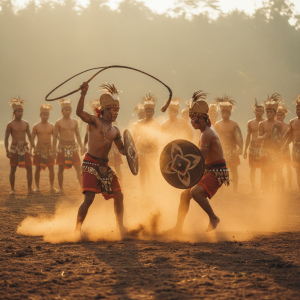
Transcending weather patterns, the ultimate way to time your visit is by aligning it with the Manggarai cultural calendar. The most significant event is the Penti ceremony, a collective harvest festival of thanksgiving and a ritual to pray for prosperity in the year to come. Typically held in November, the exact dates are determined by the village elders based on the lunar calendar, making advance planning with a well-connected operator essential. Penti is a vibrant, multi-day affair involving the entire community and neighboring villages. It includes ancient rituals, the sacrifice of chickens and pigs to honor ancestral spirits, and powerful displays of the Caci, a ritual whip fight between two men symbolizing the dynamic between challenger and defender.
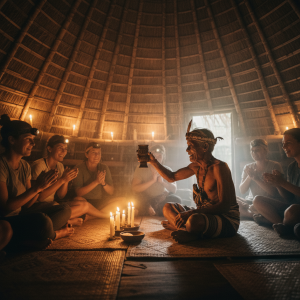
Attending Penti is not a passive tourist experience; it is a deep immersion into the spiritual heart of the Manggarai people. As a guest, you are a witness to traditions that have been passed down for at least 18 generations. Securing permission and understanding the proper etiquette is paramount, which is where a bespoke Waerebo Tour — Wae Rebo Tour — UNESCO 2012 Award-Winning Mbaru… excels. Beyond Penti, other smaller ceremonies and life-cycle events occur throughout the year. The construction of a new Mbaru Niang, for instance, is a massive communal undertaking involving specific rites that can last for months. While not publicly scheduled, our local teams maintain close ties with the village elders, allowing us to sometimes offer our clients the rare privilege of observing these authentic moments of cultural continuity, a testament to the living heritage recognized by UNESCO with a 2012 Asia-Pacific Heritage Award.
A Photographer’s Perspective: Chasing the Perfect Light
For the discerning photographer, choosing the best time for a Wae Rebo village trek is a matter of defining the desired aesthetic. Each season offers a unique canvas. The dry months of June through September are, without question, the prime time for astrophotography. The low humidity and cloudless skies provide an unparalleled stage for capturing the Milky Way. On a moonless night, a 20-second exposure at f/2.8 and ISO 3200 can yield breathtaking results, with the galactic core perfectly framing the seven conical houses. The morning light is also sharp and direct, creating high-contrast images that emphasize the architectural forms of the Mbaru Niang against a deep blue sky.
The shoulder seasons of April-May and October-November are the masters of mood and color. The intermittent clouds act as a giant softbox, diffusing the harsh tropical sun and creating a softer, more flattering light for portraiture. Sunrises and sunsets are often more dramatic, with clouds catching the light in spectacular hues of orange and pink. The landscape itself is at its most photogenic, a rich tapestry of emerald and jade. This is the time to focus on landscape shots, capturing the village within its lush, vibrant context. The wet season, from December to March, presents the most challenging yet potentially most rewarding conditions. It’s a period for capturing atmosphere. The pervasive mist simplifies compositions, isolating the Mbaru Niang and creating a sense of mystery and timelessness. It’s an opportunity to create monochrome images that focus on texture and form, or to use the diffused light to capture the intimate details of village life without harsh shadows.
Quick FAQ: Your Wae Rebo Timing Questions Answered
What is the absolute coldest month in Wae Rebo?
While the entire June to September period is cool, August is typically the coldest month. Nighttime temperatures can drop to around 10°C (50°F) due to the low humidity and clear skies, so packing thermal layers is highly recommended.
Can I visit during the Penti festival?
Yes, it is possible, but it requires significant advance planning. The dates are not fixed and are announced by village elders only a few months prior. A specialized operator like Wae Rebo Heritage Voyages has the local connections to secure these dates early and arrange your visit respectfully, ensuring you book your waerebo tour well in advance as spots are extremely limited.
How does timing affect what I should pack?
Dramatically. For the dry season, focus on layers: light clothes for the trek, a fleece for the evening, and a warm jacket for the cold nights. For the wet season, waterproofs are non-negotiable: a high-quality rain jacket, waterproof trousers, and waterproof hiking boots with excellent grip are essential. A dry bag for electronics is a necessity year-round, but critical from December to March.
Is Wae Rebo ever closed to visitors?
The village itself does not officially close. However, during the peak of the wet season, particularly in January and February, local authorities may advise against the trek if heavy, continuous rainfall makes the path unsafe or raises the risk of landslides. The safety of our guests is our primary concern, and we will always follow official guidance.
Ultimately, the “best” time to visit Wae Rebo is a deeply personal calculation, weighing ideal weather against a desire for solitude, or trading trail comfort for the chance to witness a vibrant cultural ceremony. Each season unveils a different facet of this remarkable place. The key is not to find a perfect window, but to understand the unique character of each month and align it with your own aspirations for the journey. Whether you seek the star-filled skies of August or the misty solitude of January, a well-planned expedition is the foundation of a profound experience.
Allow us to help you choreograph your journey. Explore our meticulously crafted itineraries and discover how a Wae Rebo Heritage Voyages waerebo tour can connect you to the heart of Manggarai culture, no matter the season. Contact our travel specialists to begin planning your ascent.