Updated: May 2026
How Much Does a Private Wae Rebo Village Trip Cost?
- Standard Private ($1,200-$1,800): Includes a private 4×4 vehicle, a licensed local guide, and all village entry donations.
- Premium Private ($2,000-$3,500): Adds superior lodging in Labuan Bajo, specialist guides, and enhanced culinary experiences.
- Ultra-Luxe ($4,500+): Incorporates chartered transport, academic experts, and exclusive, curated cultural interactions.
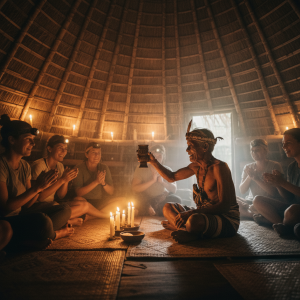
The air thins and cools with every turn of the rugged path. Mist clings to the ancient ferns, and the only sounds are your own breathing and the distant call of a tropical bird. After a three-hour trek, you round a final bend. There, arranged in a perfect horseshoe on a clipped green clearing, seven conical Mbaru Niang houses rise from the clouds. The scent of woodsmoke from the communal hearth reaches you, a primal welcome. This is not a postcard; it is your arrival. You are in Wae Rebo, and the world you left behind feels a million miles away. For those of us accustomed to charting the globe’s most exclusive corners, the question isn’t whether to go, but how to do so with the right measure of comfort, insight, and respect. Understanding the private Wae Rebo village trip cost is the first step in that meticulously planned journey.
Deconstructing the Core Costs of a Private Wae Rebo Expedition
At its foundation, any private journey to Wae Rebo is built on a logistical framework dictated by the village’s profound isolation. These are the non-negotiable elements that form the baseline price of any reputable itinerary. First and foremost is transportation. The 125-kilometer drive from Labuan Bajo to Denge, the trek’s starting point, is a 5- to 6-hour endeavor over roads that quickly devolve from pavement to punishing tracks. A sturdy, air-conditioned 4×4 vehicle is not a luxury; it is a necessity. Based on my conversations with our most trusted ground operators in Flores, securing a reliable vehicle with an experienced driver typically costs between $150 and $250 per day. This fee covers the driver, fuel, and the significant wear and tear these vehicles endure. Next is your guide. A licensed local guide is your passport into the Manggarai culture. They are far more than navigators; they are your interpreters, your liaisons with the village elders, and your source for the rich oral histories that define this place. A qualified guide commands a fee of $70 to $120 per day. Finally, there are the direct community contributions. Upon arrival, every visitor participates in the Wualu welcoming ceremony and provides a donation of IDR 325,000 (approximately $21 USD) per person. This fee, set by the village cooperative, directly funds your overnight stay in the Mbaru Niang, your meals, and the community’s ongoing preservation efforts. These three pillars—vehicle, guide, and village fees—constitute the irreducible core of the Wae Rebo tour cost.
The Mid-Range Tier: Elevating Comfort and Access ($2,000 – $3,500 pp)
For the discerning traveler, the journey is as important as the destination. This is where the mid-range private tour distinguishes itself, moving beyond mere logistics into the realm of curated comfort. The most significant upgrade in this tier, which typically falls between $2,000 and $3,500 per person for a 3-day/2-night itinerary, is accommodation. Instead of a simple guesthouse in the dusty transit town of Dintor, your itinerary will include pre- and post-trek nights at one of Labuan Bajo’s premier resorts. Properties like the Ayana Komodo Waecicu Beach or Sudamala Resort, Seraya, with nightly rates often exceeding $400, provide a necessary haven of comfort to bookend the rustic authenticity of the village stay. Another key differentiator is the caliber of your guide. While all licensed guides are knowledgeable, this price point grants you access to a specialist. You might travel with a guide who has a degree in anthropology, is a published photographer with an intimate knowledge of the landscape, or has personal family ties to the village. These experts, whose day rates can be upwards of $200, offer a depth of context that transforms a visit into a profound learning experience. Furthermore, the logistical elements are smoother. Expect seamless airport transfers, higher-quality meals at select restaurants en route, and perhaps the inclusion of a side excursion, such as a private viewing of the unique Lingko ‘spider web’ rice fields near Cancar. This is the level where the experience begins to feel less like a rugged trek and more like a polished expedition, a hallmark of the journeys we design at Wae Rebo Heritage Voyages.
The Luxury Apex: What Does a $4,500+ Itinerary Include?
When the budget extends beyond $4,500 per person, you enter the realm of truly bespoke and exclusive travel. This is where the private Wae Rebo village trip cost reflects unparalleled access and seamless execution. Transportation, for instance, can be entirely reimagined. I recently corresponded with a client who chartered a helicopter from Labuan Bajo to a pre-scouted landing zone a short distance from Denge, effectively cutting the arduous 6-hour overland journey to a scenic 45-minute flight. This option alone can add over $10,000 to a trip’s cost. The experience within the village is also elevated. An operator at this level can arrange for truly private interactions that go beyond the standard visitor experience. This could mean a one-on-one coffee processing demonstration with the village head, a private weaving lesson from a master artisan, or even commissioning a special performance of the Caci whip-fighting dance, a ritual usually reserved for major festivals. The accompanying personnel become more specialized as well. It’s not uncommon for these trips to be led by a Western academic or a renowned cultural historian who provides university-level commentary throughout the journey. “The value is in the narrative,” Finally, this tier is defined by an all-inclusive, worry-free ethos. It includes top-tier travel insurance, the service of private porters to carry your gear, and even a private chef to prepare elevated meals that complement the traditional village fare.
Hidden Variables: Factors That Influence Your Final Quote
Beyond the tiered levels of service, several dynamic factors can significantly influence the final price of your private Wae Rebo journey. Seasonality is paramount. The dry season, running roughly from April to October, is the most popular time to visit. During these peak months, demand for the best 4×4 vehicles and most experienced guides skyrockets, potentially increasing their rates by 20-30%. Traveling in the shoulder months or the wet season (November-March) can yield lower prices, but you must be prepared for more challenging trekking conditions and potential travel disruptions. Your group size is another critical variable. The high fixed costs of a private vehicle and guide are divided among the number of travelers. Therefore, the per-person cost for a solo traveler or a couple will be substantially higher than for a private group of four or six. A solo traveler might pay $1,800 for a trip that would cost $1,200 per person for a group of four. The duration of your trip also plays a role. While a whirlwind 2-day/1-night trip is the most economical, it is also the most exhausting. Extending to a 3-day or even 4-day itinerary allows for a more relaxed pace and the inclusion of other nearby Manggarai cultural sites, but naturally increases the overall cost. Finally, consider your booking window. The best guides and vehicles are often booked months in advance, especially for peak season dates. Attempting to arrange a high-quality private tour with less than 30 days’ notice may incur surcharges or limit your options to less-experienced providers.
A UNESCO-Recognized Heritage Site: Where Your Money Goes
It’s crucial to understand that the cost of visiting Wae Rebo is an investment in one of Indonesia’s most vital cultural preservation projects. This is not a theme park; it is a living community that has masterfully balanced its ancestral heritage with the realities of the 21st century. In 2012, this delicate balance was recognized on the world stage when the village received the prestigious UNESCO Asia-Pacific Award for Cultural Heritage Conservation. This award celebrated the community-led revival of their traditional Mbaru Niang houses, a project undertaken with guidance from a team of Jakarta-based architects and conservationists. A significant portion of your tour cost directly supports this ongoing work. The village donation ensures the intricate, multi-layered roofs of ijuk palm fibre can be repaired, the structures maintained, and the traditions passed to the next generation. As detailed by Indonesia’s official tourism portal, indonesia.travel, the income from responsible tourism has allowed the community of roughly 18 families to improve their access to education and healthcare without compromising their unique cultural identity. When you book a well-vetted private Wae Rebo village trip, you are not merely a tourist. You are a patron of a fragile, world-renowned cultural ecosystem. Your financial contribution is a direct vote for its survival and prosperity, ensuring that the woodsmoke continues to rise from those seven iconic peaks for generations to come.
Quick FAQ on Wae Rebo Trip Costs
Can I visit Wae Rebo without a guide?
While physically possible to reach the trailhead on your own, it is culturally inappropriate and highly discouraged. A local guide is essential for navigating the complex social protocols, including the formal Wualu welcoming ceremony with the village elders. Without a guide to act as an intermediary, you risk causing offense and will miss the entire cultural context of your visit.
Are credit cards accepted in Wae Rebo?
Absolutely not. Wae Rebo and all the small villages on the route from Labuan Bajo operate on a strictly cash-only basis. You must carry sufficient Indonesian Rupiah (IDR) to cover your village donation (IDR 325,000 per person), guide and driver tips, and any small purchases like hand-woven textiles or locally grown coffee. The last reliable ATM is in Labuan Bajo.
What is a reasonable tip for the guide and driver?
Tipping is a personal gesture, but a good benchmark for excellent service is IDR 150,000–200,000 (around $10-13 USD) per day for your guide and IDR 100,000–150,000 ($7-10 USD) per day for your driver. It’s best to present this in a sealed envelope at the end of your trip as a sign of gratitude.
Does the private Wae Rebo village trip cost include flights to Labuan Bajo (LBJ)?
Typically, no. The costs quoted by tour operators are for ground arrangements originating and concluding in Labuan Bajo. Domestic flights from major hubs like Bali (DPS) or Jakarta (CGK) to Komodo Airport (LBJ) are a separate expense. Depending on the season and carrier, expect to pay between $100 and $300 for a round-trip ticket from Bali.
The journey to Wae Rebo is an investment—in a rare cultural encounter, in the preservation of heritage, and in a memory that will far outlast the fleeting cost. It is a pilgrimage to a place where time moves differently, a place that reminds us of the profound beauty of community and tradition. The cost reflects not just the logistical challenges of reaching this remote corner of the world, but the immense privilege of being welcomed into it. To begin crafting your personal journey to this remarkable village, explore our bespoke waerebo tour options or contact our travel specialists today.